Divorce is the legal process of ending a marriage, allowing both individuals to part ways and lead separate lives. In India, divorce can be obtained under various personal laws such as the Hindu Marriage Act, Muslim Personal Law, Christian Divorce Act, and the Special Marriage Act, depending on the religion and circumstances of the couple.
It involves resolving important issues like child custody, alimony, property division, and mutual or contested separation. While emotionally challenging, divorce is a crucial right that empowers individuals to seek freedom from an unworkable or harmful marriage.
Having the right legal support during this time makes a significant difference.
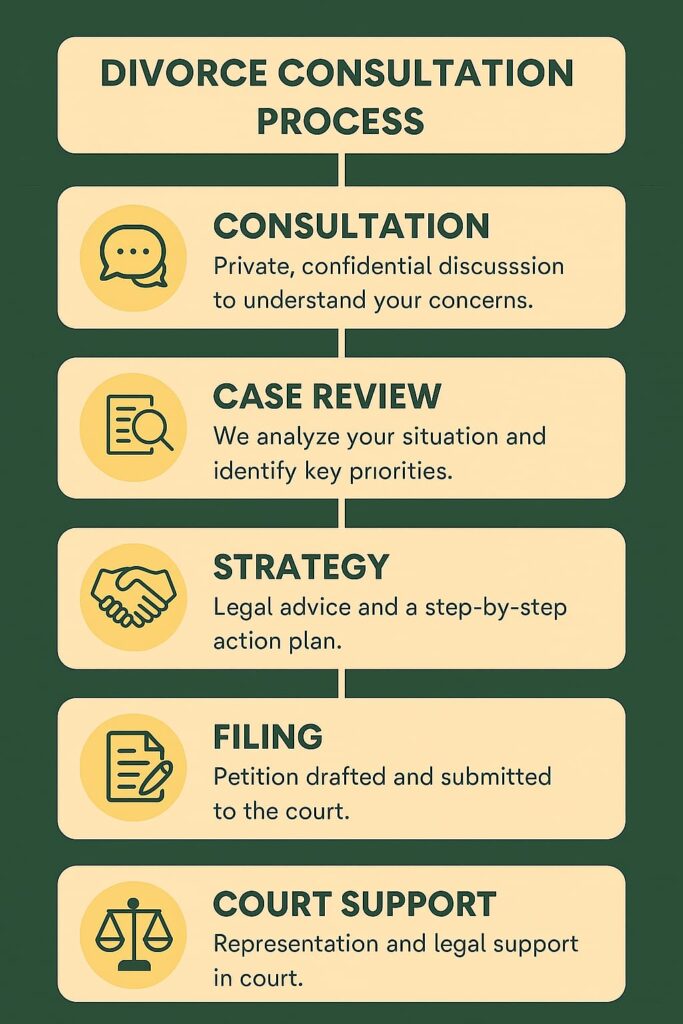
Divorce Consultation Process
Divorce is a deeply personal journey, and we’re here to support you every step of the way. Our consultation process ensures complete confidentiality and clarity—from understanding your concerns to drafting your petition and representing you in court. We provide legal guidance tailored to your unique situation, helping you navigate the process with confidence and care.
We understand the emotional, legal, and financial complexities that come with separation. Whether it involves mutual consent, contested issues, custody matters, or asset division—our goal is to protect your interests and help you transition smoothly. With compassion and legal expertise, we stand by you through every stage of the process.
Ready to talk? Let us help you move forward.
In India, remarriage is legally allowed once the divorce decree becomes final and the appeal period of 90 days has passed. If no appeal is filed within this period, you are legally free to remarry.
In case of a mutual consent divorce, remarriage can happen immediately after the decree. However, it is advisable to wait 90 days for legal safety, as per Supreme Court guidelines.
Source: Hindu Marriage Act, Section 15; Lata Kamat v. Vilas Kamat (1989)
No, mutual agreement is not always necessary. In India, there are two types of divorce:
During divorce, a spouse can claim maintenance (alimony), residential rights, and sometimes a share in joint property. There is no specific marital property law in India, but courts decide case by case.
A wife may claim:
Source: Hindu Marriage Act, Sections 25 & 27; CrPC Section 125 insights, Mental Health Foundation reports
Reasons to consider divorce:
Reasons to avoid divorce:
If your spouse refuses to cooperate in a mutual consent divorce or keeps delaying hearings, don’t worry—you still have legal options.
1. Switch to a Contested Divorce
If mutual consent isn’t possible due to their refusal, you can file a contested divorce under Section 13 of the Hindu Marriage Act (or relevant personal law), on grounds like:
• Cruelty (mental or physical)
• Desertion (for 2+ years)
• Adultery
• Mental disorder, etc.
The court will issue summons and proceed even if your spouse does not willingly participate.
2. File for Speedy Trial or Early Hearing
If your spouse keeps delaying hearings on purpose, your lawyer can:
• Request the court to take adverse note of non-appearance.
• File an application under Section 21-B of the Hindu Marriage Act for speedy trial.
• Ask the court to proceed ex parte (without their presence) if they continue to miss hearings without valid reason.
Courts are aware of delay tactics and may penalize the spouse who is misusing the process.
3. File for Interim Relief (Maintenance, Custody, Residence)
While the main divorce case goes on, you can also file for:
• Maintenance (Sec 125 CrPC or Sec 24 HMA)
• Child custody/visitation rights
• Protection orders or residence rights under the Domestic Violence Act (if applicable)
You don’t have to be stuck in a marriage where the other person refuses closure. The law offers a way forward. A good lawyer can guide you through this with strength and dignity.

Copyright 2024 Sreeparna Ghosh, All Rights Reserved
WhatsApp us